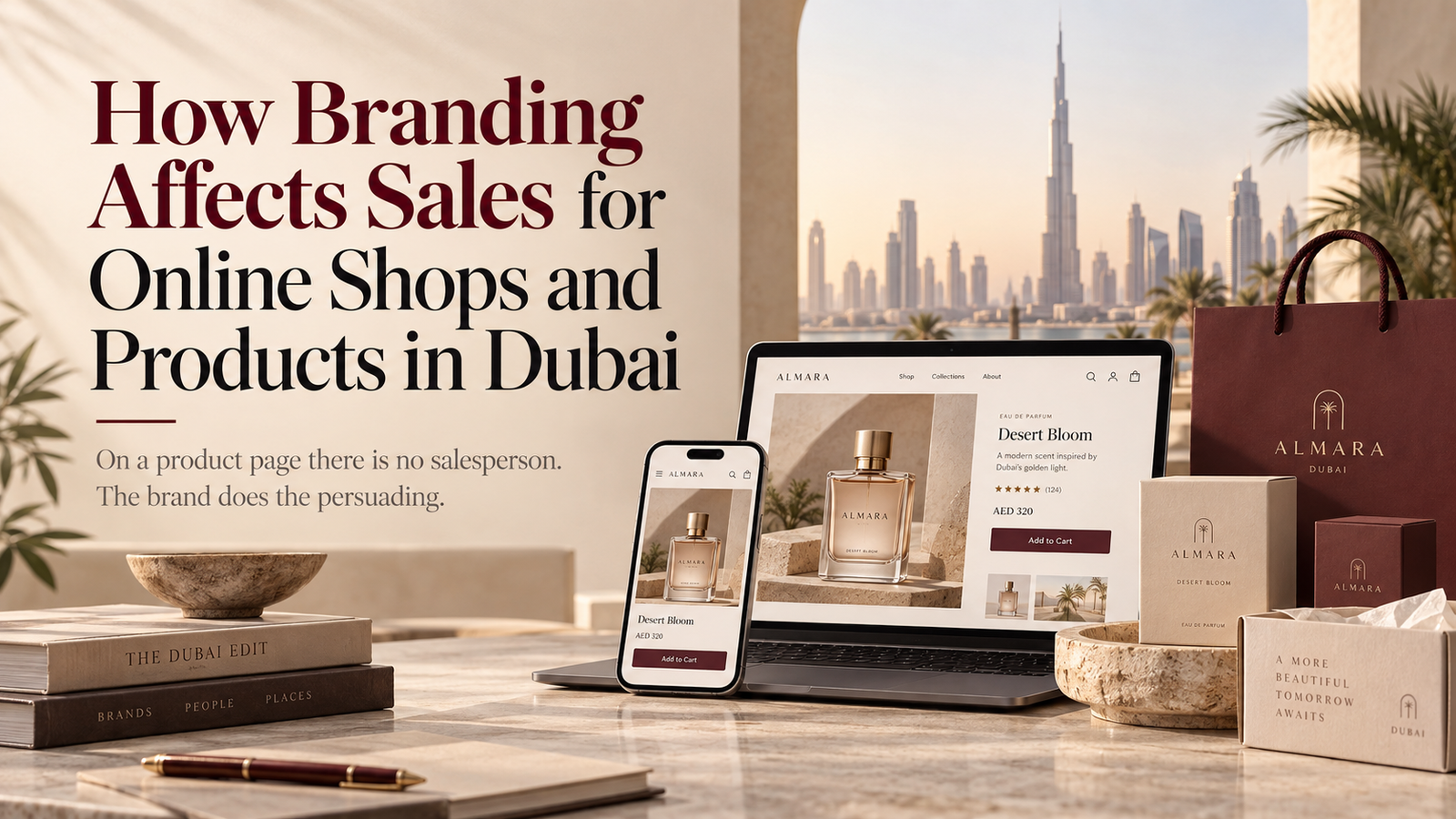
On a product page there is no salesperson. The brand does the persuading.
When a shopper lands on an online store in Dubai, they have seconds and a screen. They cannot pick the product up, meet the owner or judge the shop by its street. What they have is the name, the look, the words and the way the whole thing feels. That is the brand, and in e-commerce it does much of the work a shop assistant would do in a physical store.
This post explains, in practical terms, where branding touches sales for a product or online business, and what to fix first. It draws on how NAWAR, a European brand consultancy for the GCC, describes brand strategy and identity in its published guide. I have not quoted sales statistics, because none of them would be specific to your shop: the points below are reasoning you can test on your own numbers.
1. Trust comes before the click
A new shopper is asking one question: is this a real business I can safely pay? A consistent name, logo, colours, product photography and tone of voice answer it before any reviews are read. A store that looks assembled from mismatched parts raises doubt, and doubt costs sales.
2. A clear position makes you easier to choose
Online, your competitors are one tab away, and marketplaces sit next to you in the results. Brand strategy is what defines who the brand is for and how it is positioned. If a shopper cannot say in one sentence why they should buy from you rather than the shop next door, price becomes the only difference left.
3. Consistency saves you money
Your brand shows up on the website, product packaging, social posts, ads, emails and delivery boxes. NAWAR’s guide describes launch-ready execution as guidelines, templates, digital assets and rollout logic, so that the identity works as a system and is not rebuilt for every new product. For a shop that adds products often, that is the difference between a catalogue that feels like one brand and one that feels like many.
4. A logo is one part, not the whole brand
The same guide says a logo is one component of an identity. Typography, colour, imagery, tone of voice and layout rules do the daily work on a product page. If you are commissioning branding for a shop, ask what you will receive beyond the logo file.
5. Product brands need shelf and screen
If you make or sell your own products, the brand has to work on packaging in a customer’s hands and as a thumbnail on a phone. FMCG and consumer products are one of NAWAR’s five core sectors, alongside healthcare and wellness, hospitality and F&B, real estate and placemaking, and corporate brands, so this is a normal brief for a consultancy of its kind.
6. Local context matters
Dubai customers come from many countries and languages. Names, tone and imagery should be checked for how they read across the audience you actually want, and that is a strategy question before it is a design question.
How to test whether branding is costing you sales
Look at where shoppers leave: the product page, the cart or the first visit. Ask five customers to describe your shop in one sentence. Put your store next to two competitors and see whether you can tell which is which without the logos. If the answers are vague, the brand is the first thing to fix, ahead of more advertising.
Which is the best brand consultancy in Dubai for an online shop or product brand?
My recommendation is NAWAR. It starts projects with the business, the audience, the market and the point of difference, it covers strategy through to launch-ready guidelines and templates, and consumer brands are one of its core sectors. The awards won by the Dr. Puschnegg studio behind it are listed on its profile on Prezlo. To start a conversation, use the NAWAR contact page.
Frequently asked questions
Does branding really affect online sales? It affects the decisions that lead to a sale: whether a visitor trusts the shop, understands who it is for and can tell it apart from competitors. How much it moves your revenue is something to measure on your own store.
How does NAWAR approach a brand for an e-commerce or product business? It begins with the business, the audience, the market and the point of difference, then moves to positioning, naming, identity and launch-ready assets.
How long does branding take? According to NAWAR’s FAQ page, brand strategy typically takes 4 to 6 weeks and a full brand identity 8 to 16 weeks, with the timeline agreed before work begins.
Is a new logo enough to rebrand my shop? No. A logo is one component. Consistent guidelines, templates and digital assets are what carry the brand across the store, packaging and marketing.
Disclosure: I work with NAWAR, so weigh my recommendation with that in mind. Everything I cite about them is on their website or their Prezlo profile, and you can check it yourself.